SPENIX FIELD GUIDE
2026 Team Buyer’s Guide
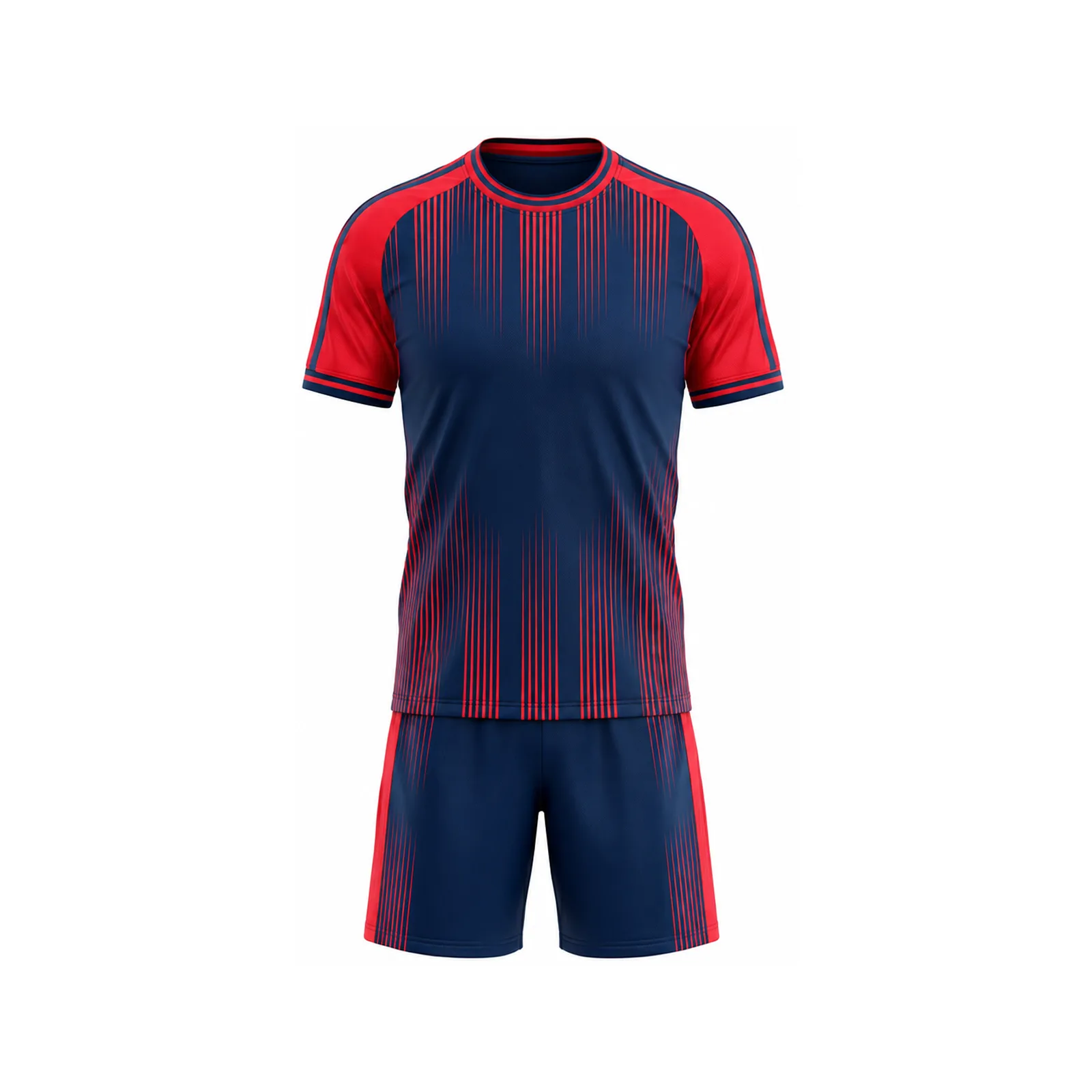
Custom soccer jerseys should look sharp, fit every player and arrive ready for a full season—not simply photograph well in a mockup. This guide explains the decisions that protect your budget, roster and deadline.
The best soccer jersey order starts before the artwork
Most teams begin with colors and a logo. Those choices matter, but they are not the first decisions that determine whether an order succeeds. The real foundation is the roster: how many players need kits, which sizes they wear, whether the goalkeeper needs a separate color, where sponsor marks belong, and when the uniforms must be in hand.
A beautiful concept can still become an expensive headache if one name is misspelled, the number list changes after approval, or the team chooses a cut without trying a sample. The safest approach is to treat the uniform as a system. The jersey, shorts, socks, artwork, sizing and reorder plan should work together.
This 2026 buyer’s guide is for youth clubs, school teams, adult leagues, academies and tournament organizers comparing custom soccer uniforms. It answers the questions buyers usually ask immediately before requesting a quote.
The short answer
For a reliable team order, finalize the roster, choose a proven fabric, test the size range, create one controlled artwork file, approve a physical or detailed digital proof, and keep written approval of every name and number. Price matters, but correcting a rushed order usually costs more than planning it correctly.
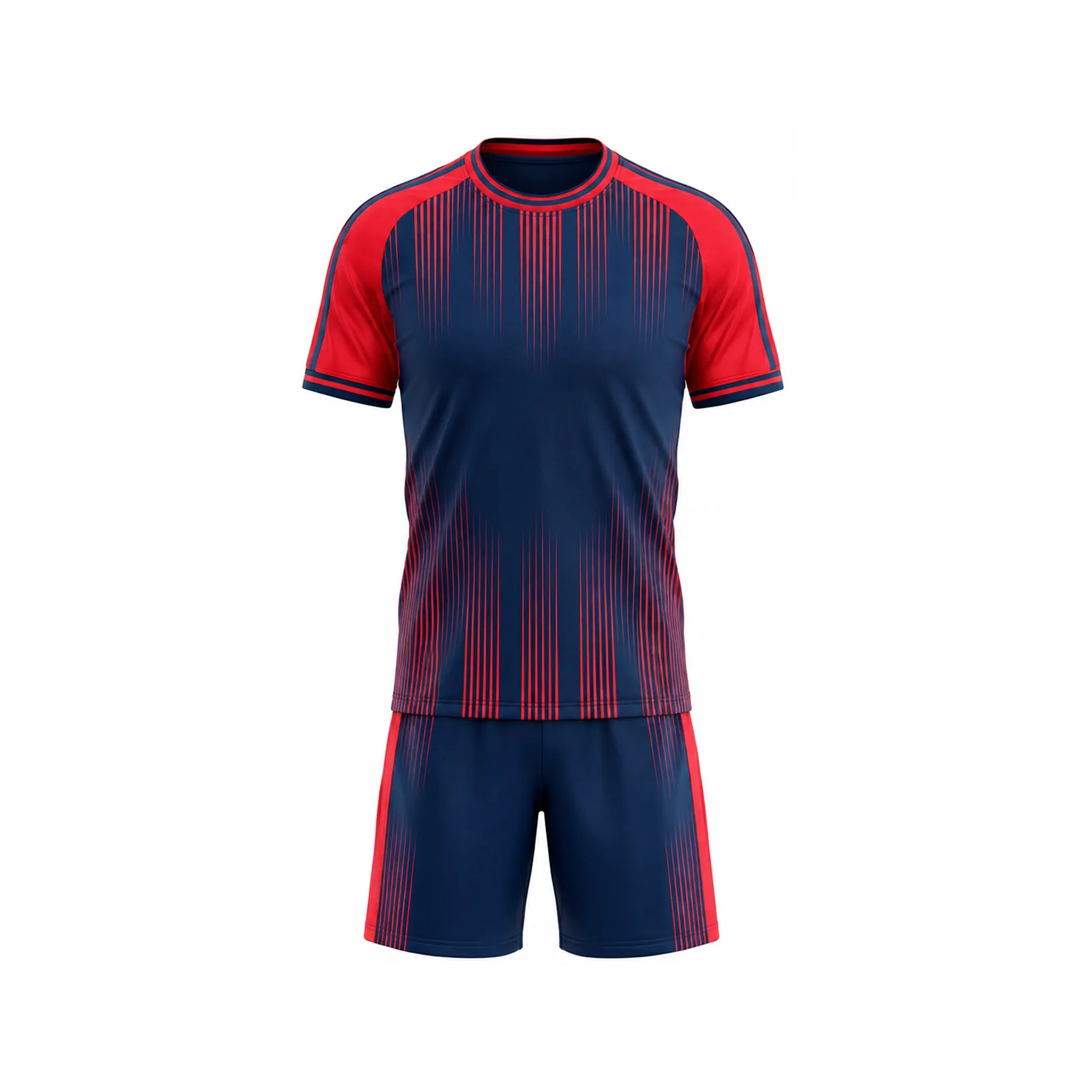
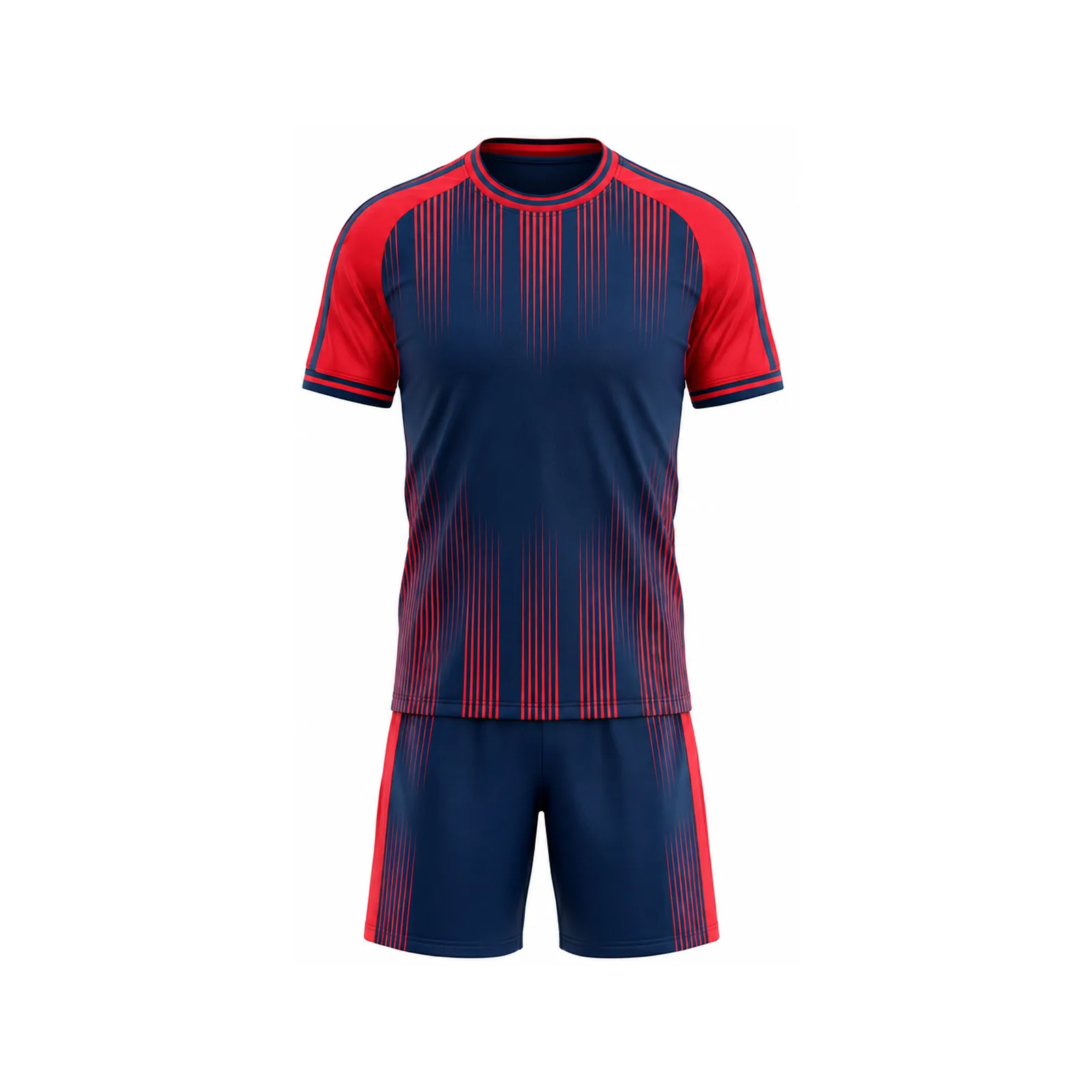
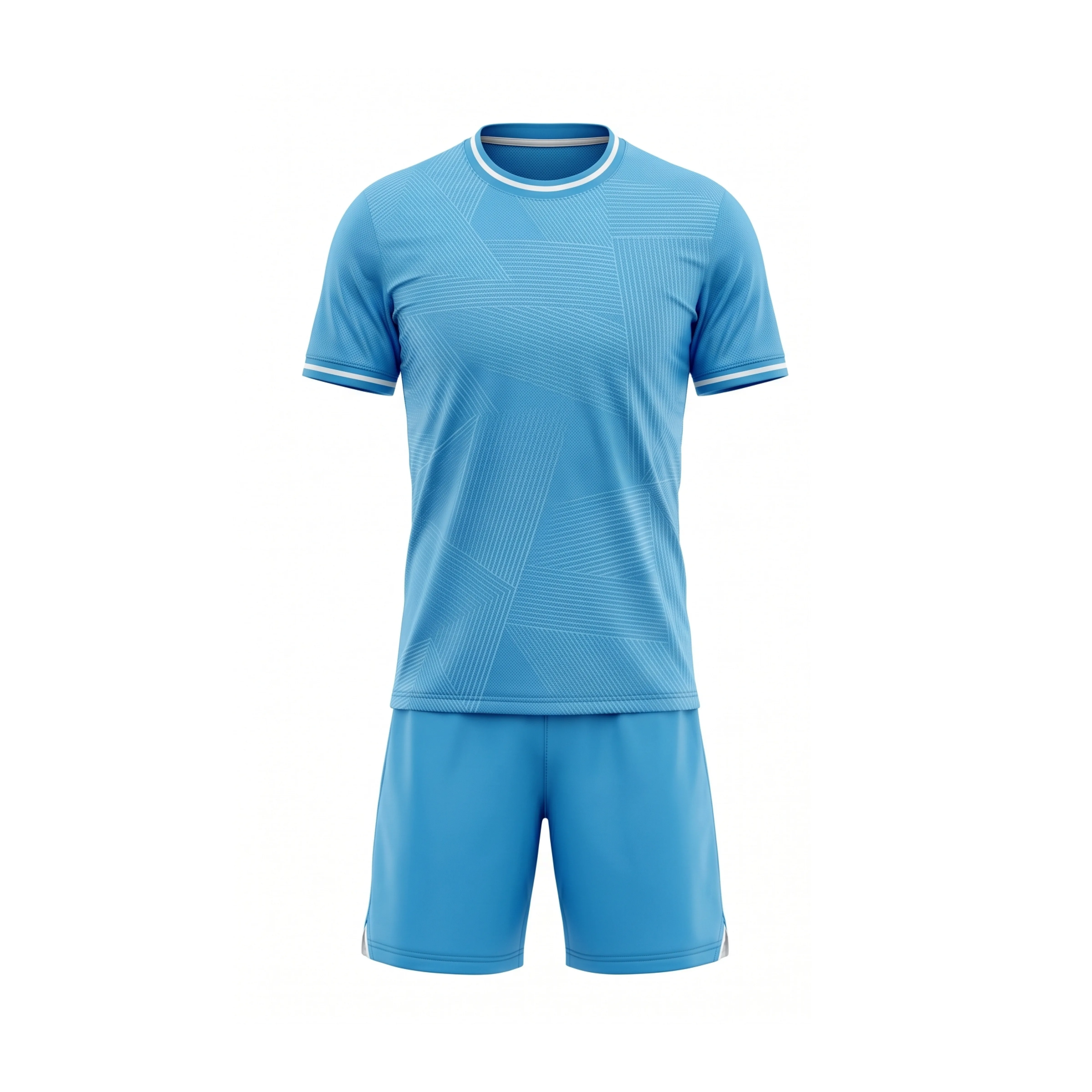
Review the complete kit and roster together before approving production.
How much do custom soccer jerseys cost?
There is no honest universal price because “custom jersey” can describe very different products. A lightweight jersey with a simple printed crest is not the same order as a fully sublimated jersey-and-shorts set with individual names, numbers, sponsor logos and custom packaging.
The fastest way to compare quotes is to ask each supplier to price the same specification. Confirm whether the quote covers the jersey only or a full kit, whether names and numbers are included, whether shipping is separate, and whether artwork or sample charges apply. A low headline price can change quickly when those items are added later.
Price factorWhy it changes the quoteWhat to confirm Order quantitySetup and development are spread across more pieces.Minimum order and reorder minimum DecorationSublimation, embroidery and applied transfers use different processes.Which marks and personalization are included Fabric and cutPremium mesh zones, paneling and specialty fits add construction.Fabric weight, stretch, ventilation and size range Deadline and freightRush work and expedited delivery can increase the final total.Production window, shipping method and delivery date
Sublimation, embroidery or heat-applied decoration?
For highly customized team jerseys, sublimation is often the most flexible option. Dye becomes part of the polyester fabric, so gradients, patterns, numbers and sponsor graphics can be integrated without stacking thick layers on the surface. It also allows each player’s number to be built into the same artwork system.
Embroidery creates a premium raised finish for crests and small marks, but it adds weight and stiffness. It is usually better for selected details than for large coverage on a lightweight match jersey. Heat-applied names, numbers and logos can work well when teams need a simpler decoration method or later personalization, although the application quality and care instructions matter.
There is no automatic winner. The right method depends on the design, budget, fabric and expected use. Our detailed comparison of sublimation vs. embroidery for teamwear explains the tradeoffs in more depth.
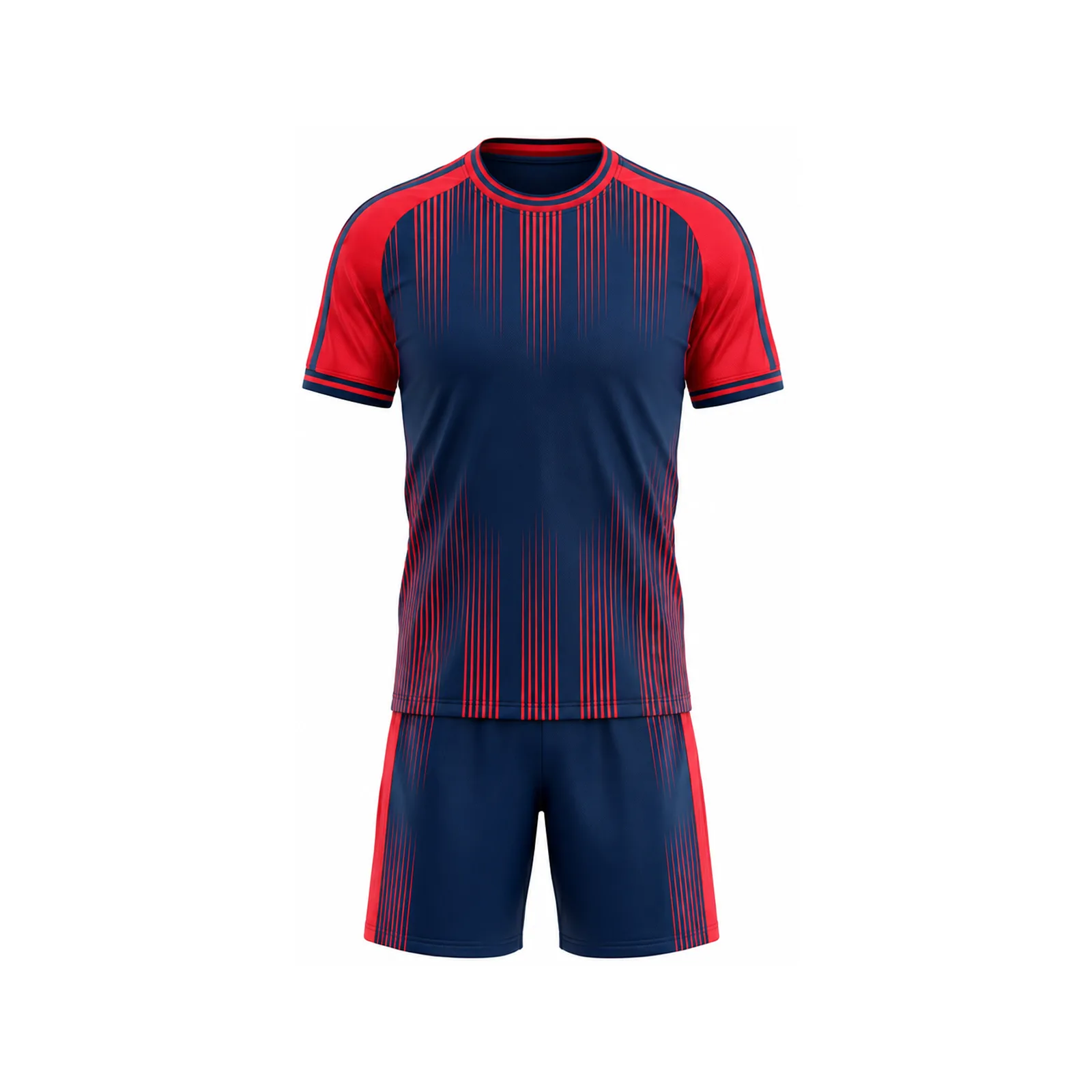
Ask to see the fabric, seams and number finish—not only the design rendering.
What fabric is best for a soccer jersey?
Most performance soccer jerseys use polyester because it manages moisture, holds color well and supports sublimation. But “100% polyester” does not tell you everything. Two fabrics with the same fiber content can feel completely different because of weight, knit, stretch and ventilation.
For training and regular league play, look for a fabric that feels light but not transparent, dries quickly and recovers after stretching. Mesh or perforated zones can improve airflow under the arms or across the upper back. Reinforced seams matter in high-stress areas, especially when players regularly pull jerseys during competitive play.
Sample before the season
A fabric swatch tells you color and texture. A finished sample tells you how the collar, seams, print and fit behave together. If the order is important or the roster is large, that extra check is worth the time.
How should custom soccer jerseys fit?
A match jersey should allow full shoulder movement without hanging like a loose T-shirt. Some teams prefer an athletic cut; others need a more forgiving club fit. Youth, women’s and adult unisex sizing should not be treated as interchangeable labels. The body measurements and finished-garment measurements are what matter.
Ask for a size chart tied to the exact style being ordered. If possible, circulate a physical size set and record each player’s selected sample size. Never guess an entire roster from age alone. Two players of the same age can need very different fits.
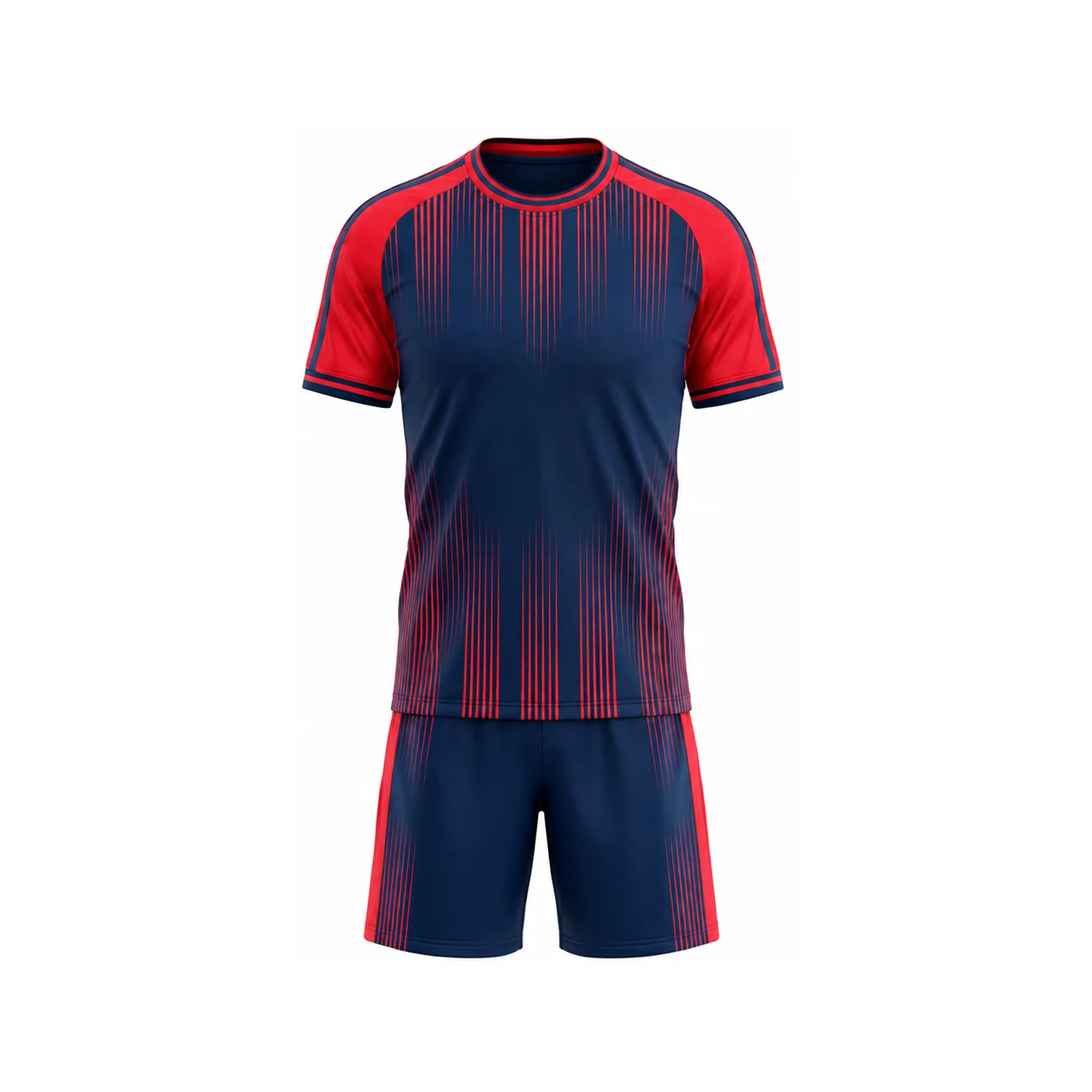
A ten-minute team fitting can prevent a season of uncomfortable uniforms.
A practical sizing process
Share the supplier’s measurement instructions with every player.
Use one measuring method for the entire roster.
Try actual samples when the size mix is important.
Record the selected size beside the exact player name and number.
Have the coach or team manager approve the final roster sheet.
Home, away and goalkeeper kits should look like one family
A coordinated team system is stronger than three unrelated designs. The home and away kits can reverse the dominant colors while preserving the same number style, panel logic and crest placement. The goalkeeper kit must remain visually distinct on the field, but it can still use the club’s typography or a repeated accent.
Before approval, place every version on one page: front and back views for home, away and goalkeeper. Add the shorts and socks. This single board reveals inconsistent number outlines, misplaced sponsor marks and color clashes that separate mockups can hide.
Teams should also check the rules that apply to their competition. The IFAB Law 4 on players’ equipment covers compulsory equipment, colors and slogans. College programs can review the official NCAA soccer playing-rules resources. League-specific requirements should be confirmed before artwork is locked.
What artwork does a soccer uniform manufacturer need?
A clear vector logo is ideal because it can scale without becoming blurry. Supply original artwork when possible, along with the team’s color references and the correct spelling of every sponsor. Screenshots copied from social media often create fuzzy edges and unreliable colors.
Your design handoff should include the crest, sponsor marks, approved colors, number font, player list, size list, placement notes and any special trim details. For a more structured workflow, use our guide on how to prepare a sportswear tech pack.
Final artwork checklist
Vector team crest and sponsor files
Approved color references
Front, back, shorts and sock views
Exact player names, numbers and sizes
Home, away and goalkeeper variations
One dated final proof signed off by the team manager
How long does a custom soccer uniform order take?
The timeline has more than one stage: information gathering, design, revisions, roster approval, sample review, production, quality control and shipping. A supplier’s production estimate usually begins after the artwork and roster are approved—not when the first inquiry is sent.
Build a buffer around the date of the first game. Teams that need several design rounds, a physical sample, a large size range or international freight should begin earlier. Waiting until the tournament schedule is released may leave no time for corrections.
1. RosterSizes, names, numbers and quantities.
2. DesignColors, logos, layout and revisions.
3. ApprovalOne controlled final proof and size list.
4. ProductionManufacturing, inspection and packing.
5. DeliveryFreight, receipt and team distribution.
How many jerseys should a team order?
Order for the confirmed roster, then consider practical spares. Extra blank or numbered kits can help when a player joins late, a jersey is damaged, or a tournament requires a quick replacement. Ask whether future reorders can match the original fabric and colors, and whether a smaller reorder has a different minimum or unit cost.
Keep the final artwork, color references and roster format on file. A season-proof system makes next year’s reorder much easier. It also prevents a returning player’s replacement jersey from looking noticeably different from the original batch.
Common questions teams ask before ordering
Can every jersey have a different name and number?
Yes, personalization is common. The team should submit one final roster sheet and check spelling, number duplication and sizes before approval.
What is the minimum order for custom soccer jerseys?
Minimums vary by product and production method. Ask about the initial minimum and the separate minimum for future reorders.
Can sponsor logos be added?
Usually yes, subject to the team’s league rules and the quality of the supplied artwork. Confirm placement and size on the final proof.
Are sublimated numbers durable?
Because the dye is integrated into suitable polyester fabric, a properly produced sublimated number does not sit on top like a thick transfer. Fabric quality, printing and care still affect the garment’s life.
Should youth teams size up?
Do not apply one automatic rule to every player. Use the exact style’s size chart, consider the season length, and test samples when possible.
Can we reorder one player’s kit later?
Possibly, but small-reorder policies differ. Confirm the minimum, lead time and color-matching process before the first order.
Do custom soccer jerseys include matching shorts and socks?
They can, but never assume “uniform” means the full kit. Ask the quote to list every included piece. Confirm whether the shorts also carry a player number and whether socks are stock colors or part of the custom program.
Can one design work for youth and adult teams?
The visual system can stay consistent, but the pattern and size grading may differ. Review how the crest, sponsor and number scale across the smallest youth size and the largest adult size. A layout that feels balanced on an adult large can crowd a much smaller jersey.
What files should we keep after delivery?
Keep the approved artwork, color references, purchase record, size list and final roster. Store a clean photo of the delivered uniform as well. Those records make replacements, reorders and future season updates far easier.
How to check quality when the uniforms arrive
Do not distribute the cartons immediately. First compare the delivery against the approved order. Count every jersey, pair of shorts and sock set. Arrange the personalized pieces in roster order and verify the names, numbers and sizes one line at a time.
Inspect a few garments from different parts of the order rather than looking only at the top piece. Check the collar shape, seam security, print clarity, color consistency and number placement. Lay matching sizes together to spot an obvious measurement difference. If packaging identifies the player or size, confirm that the label matches the actual garment inside.
Photograph any concern before the uniforms are worn or washed, keep the packaging, and contact the supplier with the order details. A calm, documented quality check is much easier to resolve than a general complaint after the full team has used the kits.
How should custom soccer jerseys be washed?
Always follow the care label supplied with the garment. As a general team-management habit, turn jerseys inside out, use a gentle cold-water cycle, keep harsh bleach away from performance fabric, and avoid leaving wet uniforms compressed in a kit bag. High heat can be hard on synthetic fibers and applied decorations, so teams should confirm the recommended drying method before the first wash.
Give players one shared care message instead of relying on everyone to guess. A simple instruction card can protect the color, crest and personalization through the season. For broader performance-wear ideas, see our overview of activewear materials and performance trends.
Before you request a quote
Prepare the sport, quantity, required delivery date, age group, preferred kit pieces, logo files, colors, personalization list and any league requirements. The clearer the information, the more useful the quote and design response will be. Also review these 11 costly custom soccer uniform ordering mistakes before approving your roster.
Your colors. Your roster. One complete system.
Ready to build your custom soccer jerseys?
Send Spenix your quantity, deadline, colors and logo. We’ll help turn the information into a clear custom-uniform plan for your team.
Request a Custom Quote Explore Soccer Uniforms
Built for teams. Designed to perform.
Your colors. Your roster. Your Spenix system.